California Cardrooms Adjust Operations Under Newly Approved Blackjack Regulations

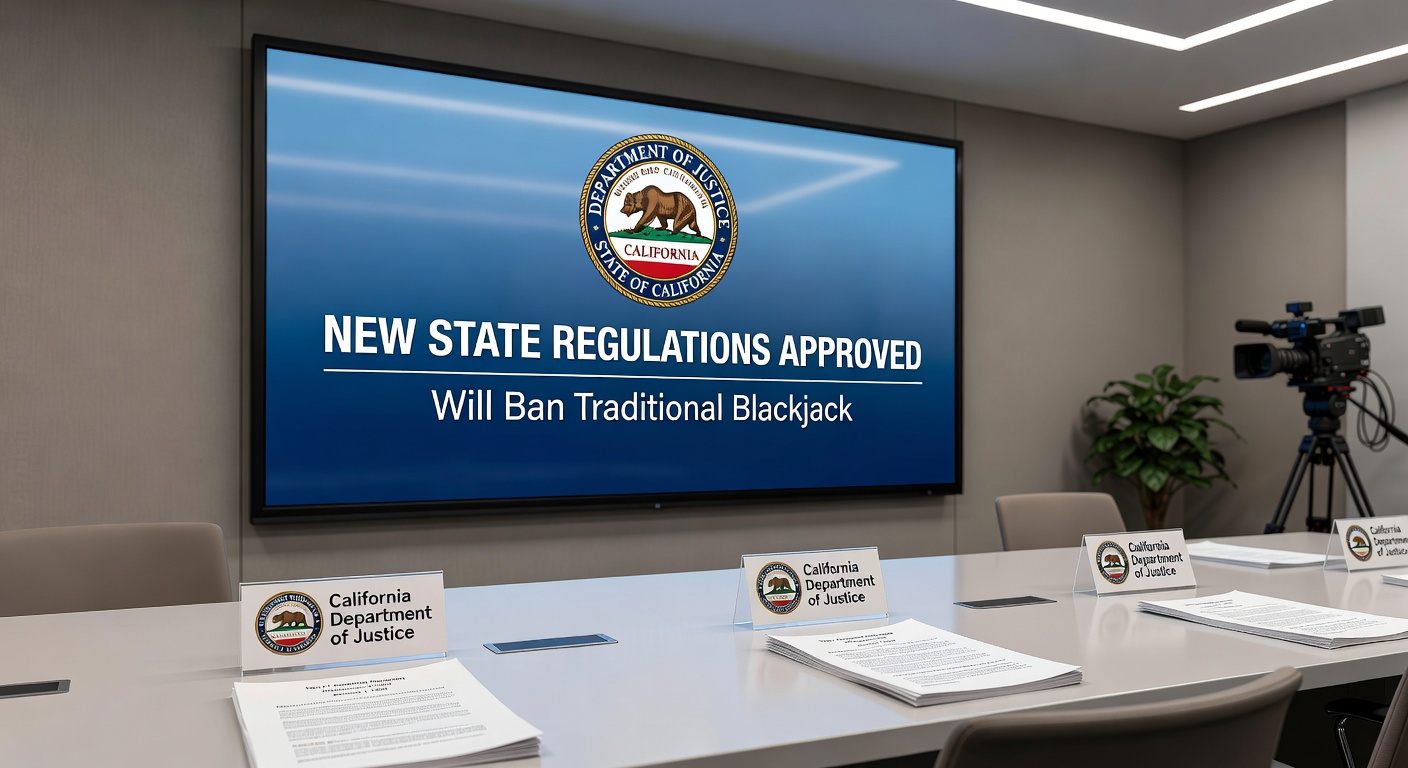
State officials have moved forward with rules that reshape how blackjack operates inside licensed cardrooms across California, and the changes center on replacing the traditional bust mechanic with a point-comparison system against the player-dealer. The Office of Administrative Law gave final approval to regulations drafted by the Department of Justice, which means cardrooms must shift away from classic blackjack rules where players can exceed twenty-one and lose automatically. Instead, outcomes now hinge on who reaches the highest total without surpassing a set target, and this adjustment applies directly to games offered in facilities that hold state licenses.
Details of the Regulatory Shift
The new framework requires that every hand resolves by comparing the player's point total to the player-dealer's hand, eliminating the possibility of a player busting outright. Cardroom operators received notice that full compliance must occur by late May, although some facilities have referenced potential extensions into July while they complete necessary procedural updates. Observers note that the Department of Justice developed these measures to align cardroom games more closely with existing statutes that govern banking games, and the regulations also address the rotation of the player-dealer position in blackjack-style offerings.
According to documents available through the Attorney General's office, the changes target games previously structured like traditional blackjack yet operated under player-dealer formats. Facilities now face the task of retraining dealers, updating software, and revising house procedures so that every table meets the point-comparison standard. Industry representatives have already flagged that these steps carry direct costs in both time and staffing resources.
Industry Response and Legal Actions
Cardroom associations have publicly stated that the transition could lead to reduced table counts during the adjustment period, which in turn affects employment levels and local tax collections that depend on gaming revenue. Several operators have joined efforts to seek court injunctions that would pause enforcement while litigation proceeds, and at least one lawsuit filed by a gaming association argues that the regulations exceed the scope of authority granted to the Department of Justice. Court filings indicate that hearings on these requests are scheduled in the coming weeks, and judges will examine whether the new rules conflict with prior interpretations of state gambling law.
Those who track gaming policy point out that similar disputes have surfaced whenever regulators clarify the boundaries between player-dealer games and prohibited banking activities. In this instance, the focus remains on how quickly facilities can adapt without interrupting service to patrons who frequent the roughly sixty licensed cardrooms operating statewide.
Timeline and Compliance Expectations
Although the core deadline sits at the end of May, several facilities have requested additional time to finalize equipment modifications and staff training programs. The Office of Administrative Law has not issued blanket extensions, yet individual cardrooms continue to negotiate specific implementation schedules with state inspectors. During June 2026, enforcement teams plan to conduct spot checks at locations that have already transitioned, while those still preparing receive guidance on interim measures that keep tables open under modified rules.
Data collected by the California Bureau of Gambling Control shows that blackjack-style games generate a substantial share of cardroom revenue in major markets such as Los Angeles County and the San Francisco Bay Area. Any sustained reduction in table availability therefore carries measurable effects on both direct employment and the secondary businesses that support gaming districts. Operators have begun posting notices to employees about possible schedule adjustments, and local governments that receive portions of gaming taxes have started reviewing budget forecasts in light of the pending changes.
Broader Context of Player-Dealer Regulations
The regulations also reinforce requirements around the rotation of the player-dealer position, a feature that distinguishes California cardroom games from traditional casino banking models. Under the updated language, the player-dealer must change at regular intervals, and the point-comparison system applies uniformly once the rotation occurs. This structure has existed in statute for years, yet enforcement had varied across jurisdictions until the Department of Justice consolidated guidance into a single regulatory package.
Facilities that already operate under player-dealer formats for other games such as pai gow poker report fewer operational hurdles, because staff members are accustomed to rotating duties and tracking point totals rather than bust mechanics. In contrast, rooms that specialized in classic blackjack formats face steeper learning curves as they rewrite dealer scripts and player-facing signage. Training materials now emphasize the new resolution method so that both employees and guests understand how hands conclude without reference to the twenty-one bust threshold.
Conclusion
Cardrooms across the state continue to implement the approved changes while monitoring court proceedings that could alter the enforcement timeline. The Office of Administrative Law's decision stands as the governing framework unless a judge grants injunctive relief, and operators have until the stated deadlines to bring every blackjack-style table into alignment with the point-comparison rules. Those following the situation expect further clarification once initial compliance reports reach state regulators in the weeks ahead.